
How and When to Use Defensive Amazon PPC
How to stop your competitors from stealing your sales.
Contents
Defensive Amazon PPC advertising has become a crucial strategy for protecting your brand’s market share. When shoppers search for your brand on Amazon, they demonstrate high purchase intent and trust in your products.
However, without proper defensive measures, competitors can intercept these valuable customers by bidding on your brand terms.
Competitors can bid on your brand name and product terms in their own campaigns. A defensive campaign bids on those same terms so the shopper sees you, not a rival, when they search for you.
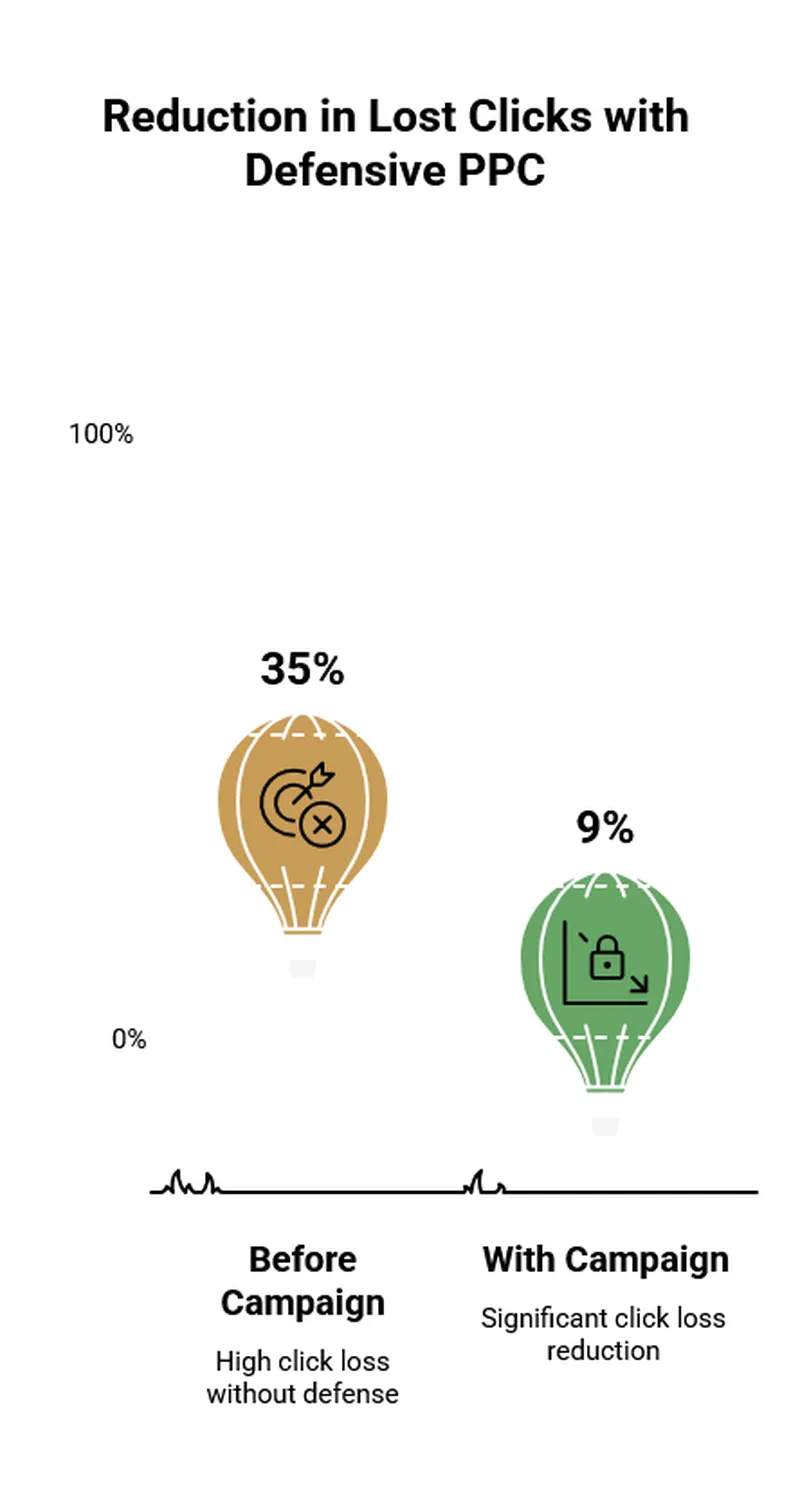
A worked example shows the scale of the problem. Before defending its brand terms, a premium kitchenware brand found competitors taking around a third of clicks on its brand searches; after tightening its brand-term defence, most of those clicks returned and brand-term sales rose noticeably. These figures are illustrative, not a promise: check Brand Analytics for your own starting point.
Understanding When to Deploy Defensive PPC
Your brand’s position in the Amazon marketplace determines the optimal timing for implementing defensive PPC strategies.
Brand Recognition
Brand recognition signals serve as key indicators for when to begin defensive advertising. Once shoppers are searching for your brand by name in meaningful numbers, those searches are worth defending. This milestone represents a critical threshold where defensive advertising becomes not just beneficial, but essential for protecting your market position.
Market Competition
The competitive landscape surrounding your brand plays a crucial role in determining the intensity of your defensive strategy.
Market competition analysis reveals that brands typically need to increase their defensive measures when competitor advertising on their terms increases by 20% or more. This often occurs during peak shopping seasons, when new competitors enter the market, or when existing competitors become more aggressive with their conquest advertising strategies. Understanding these patterns helps you adjust your defensive spending proportionally to the threat level.
Performance Metrics
Monitoring your brand’s performance metrics provides additional clarity on defensive timing.
Strong-converting brand terms attract competitor bids precisely because they convert well. Watch for falling CTR on brand searches: it is usually the first sign a competitor has moved in. Similarly, if you notice your click-through rates declining on brand searches, it often indicates increasing competitor presence in your brand space. These metrics serve as early warning signs that your brand requires stronger defensive measures.
Key Performance Metrics for Defensive PPC
Impression share serves as your primary defence indicator, showing how effectively you’re protecting your brand terms from competitor intrusion.
Aim to hold the top ad slot on your brand terms. Amazon does not publish impression share per brand, so judge coverage by whether a rival ad appears above yours when you search your own brand name.
| Metric | Target Range | Why It Matters |
|---|---|---|
| Impression Share | 90%+ | Ensures brand visibility |
| Click-Through Rate | >35% | Indicates ad relevance |
| Conversion Rate | >25% | Shows customer intent |
| ACoS | 15-25% | Measures efficiency |
Click-through rates provide crucial insight into your defensive ads’ effectiveness at capturing customer attention. Brand-term ads usually earn far higher click-through rates than non-brand ads because the shopper is already looking for you. Benchmark your own brand-term CTR against your non-brand campaigns rather than a universal number.
This elevated engagement level reflects both the high intent of brand searches and the effectiveness of your defensive positioning. When rates fall below this benchmark, it often signals either increasing competitor effectiveness or potential issues with your ad relevancy.
Conversion tracking reveals the ultimate impact of your defensive strategy on sales performance. Brand searches convert far better than non-brand searches because the shopper has already chosen you, so defensive campaigns often run at a lower ACoS than your other campaigns. Judge yours against your own non-brand ACoS, not a fixed range.
Regular monitoring of these metrics enables quick adjustments to bid strategies and budget allocations, ensuring optimal performance of your defensive campaign structure.
Implementing Effective Defensive Campaigns
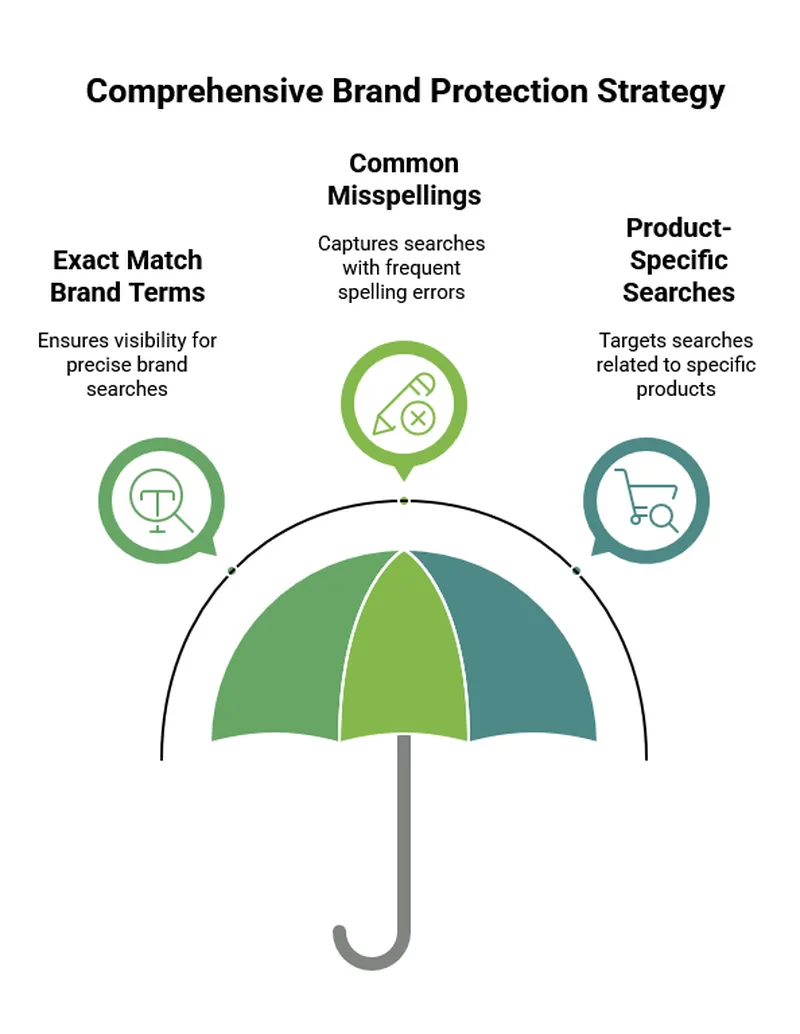
Successful defensive PPC campaigns require careful structuring and strategic targeting to maximise their effectiveness. Campaign architecture forms the foundation of your defensive strategy, determining how well you can protect your brand terms while maintaining cost efficiency. The structure must account for exact match brand terms, common misspellings, and product-specific searches to create a comprehensive shield around your brand presence.
Brand term campaign development follows a systematic approach based on search intent and conversion potential. Your primary brand name and product names carry the highest purchase intent of any search on your account, so they justify the highest defensive bids. These terms deserve the highest bid allocations and closest monitoring. Secondary brand terms, including common misspellings and brand-plus-category combinations, require moderate bid levels to maintain visibility while managing costs effectively.
Product defence strategies extend beyond simple brand term protection to include ASIN targeting and category defence. When implementing ASIN targeting, focus on your top-performing products first, as these typically face the most aggressive competitor advertising. Category defence becomes particularly important when you hold a leading position in specific product segments, where maintaining visibility can prevent competitor encroachment on your market share.
Optimising Your Defensive Strategy
Maintaining effective defensive PPC campaigns requires consistent optimisation and adjustment to changing market conditions.
Weekly Reviews
Weekly performance reviews form the cornerstone of successful campaign management. During these reviews, analyse search term reports to identify new competitor tactics, adjust bids based on performance data, and update negative keywords to prevent waste. This regular cadence of optimisation ensures your defensive strategy remains responsive to market dynamics.
Monthly Reviews
Monthly strategic assessments provide opportunities for broader campaign refinement and competitive analysis. These deeper reviews should examine performance trends across your entire defensive campaign structure, identifying opportunities for expansion or areas requiring additional protection. Pay particular attention to changes in competitor bidding patterns, especially during peak shopping seasons when competition typically intensifies. These insights guide strategic adjustments to your defensive positioning and budget allocation.
The Long Term
Long-term success in defensive advertising requires balancing protection with profitability. While maintaining high impression share on brand terms is crucial, achieving this goal efficiently demands continuous refinement of your targeting and bid strategies. Focus on identifying the most valuable brand terms through conversion rate analysis, then adjust your defensive coverage accordingly. This data-driven approach ensures your defensive spending remains proportional to the actual threat level and potential return on investment.
Conclusion
Defensive Amazon PPC represents a critical investment in protecting your brand’s market position and customer relationships.
By carefully timing your defensive strategy implementation, structuring campaigns effectively, and maintaining rigorous performance monitoring, you create a robust shield around your brand terms. Remember that successful defensive advertising requires a proactive approach, adjusting tactics as market conditions change while maintaining focus on profitability and return on investment.
Through consistent application of these principles, you’ll build a sustainable defensive strategy that protects and enhances your brand’s presence on Amazon.